Places That Remain.
An ongoing series of illustrated works exploring Drogheda’s built heritage as a window to its cultural and social identity.
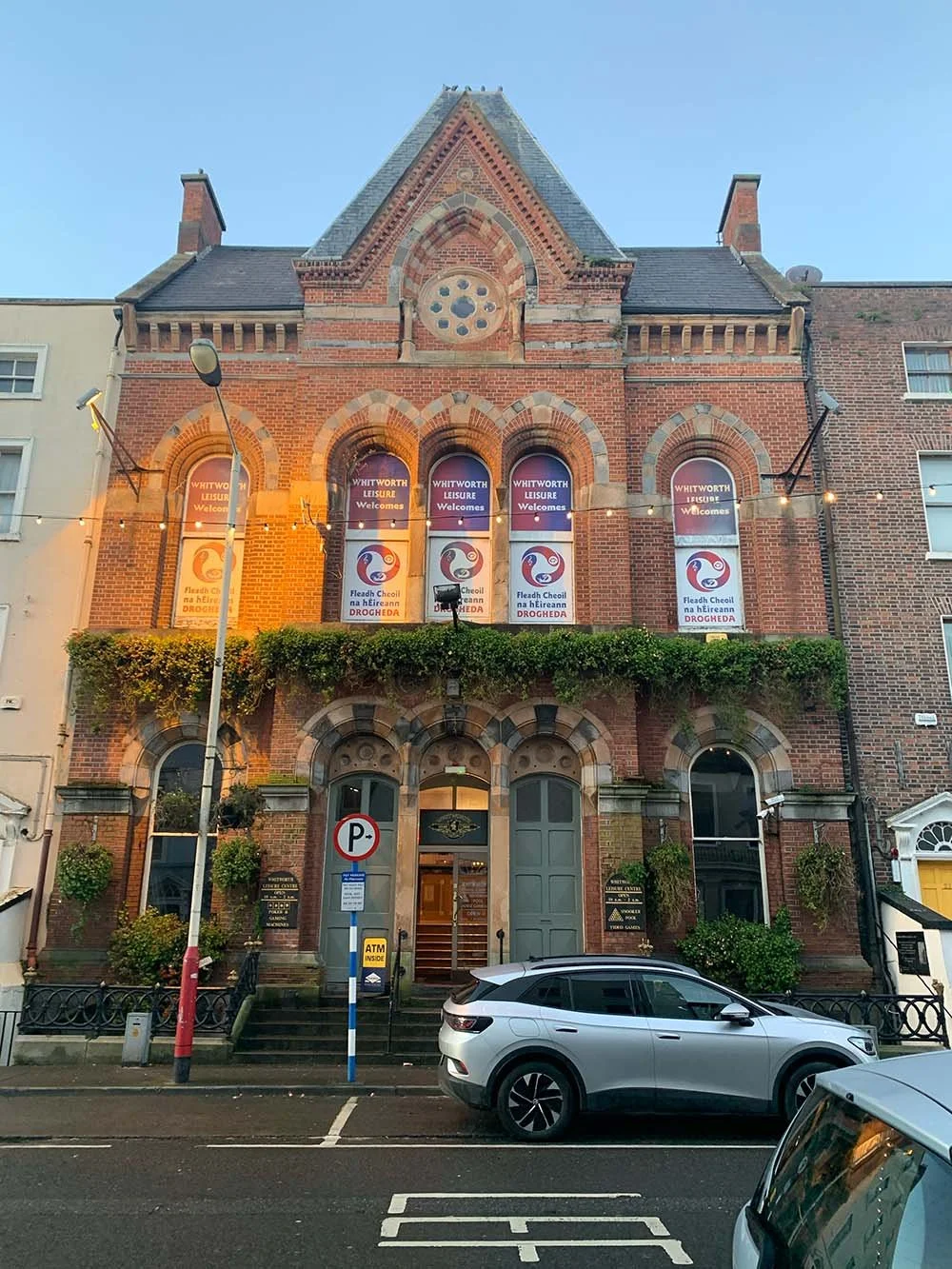
Drawing on Drogheda’s local heritage - from pubs and poetry to overlooked buildings and everyday streets and its strong identity as part of the wider historic Boyne Valley - the project translates place into contemporary print.
This project is a love letter to Drogheda and its built heritage - traces fading details and quiet landmarks: fragments of typography, gestures of architecture, and the atmosphere of spaces shaped by time. A visual record and witness of what lingers, and what is slowly disappearing.
Featured Works
McPhails, Laurence Street
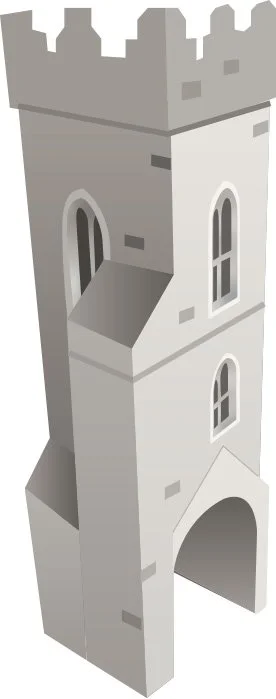
Illustration of a gray castle tower with battlements and arched windows.
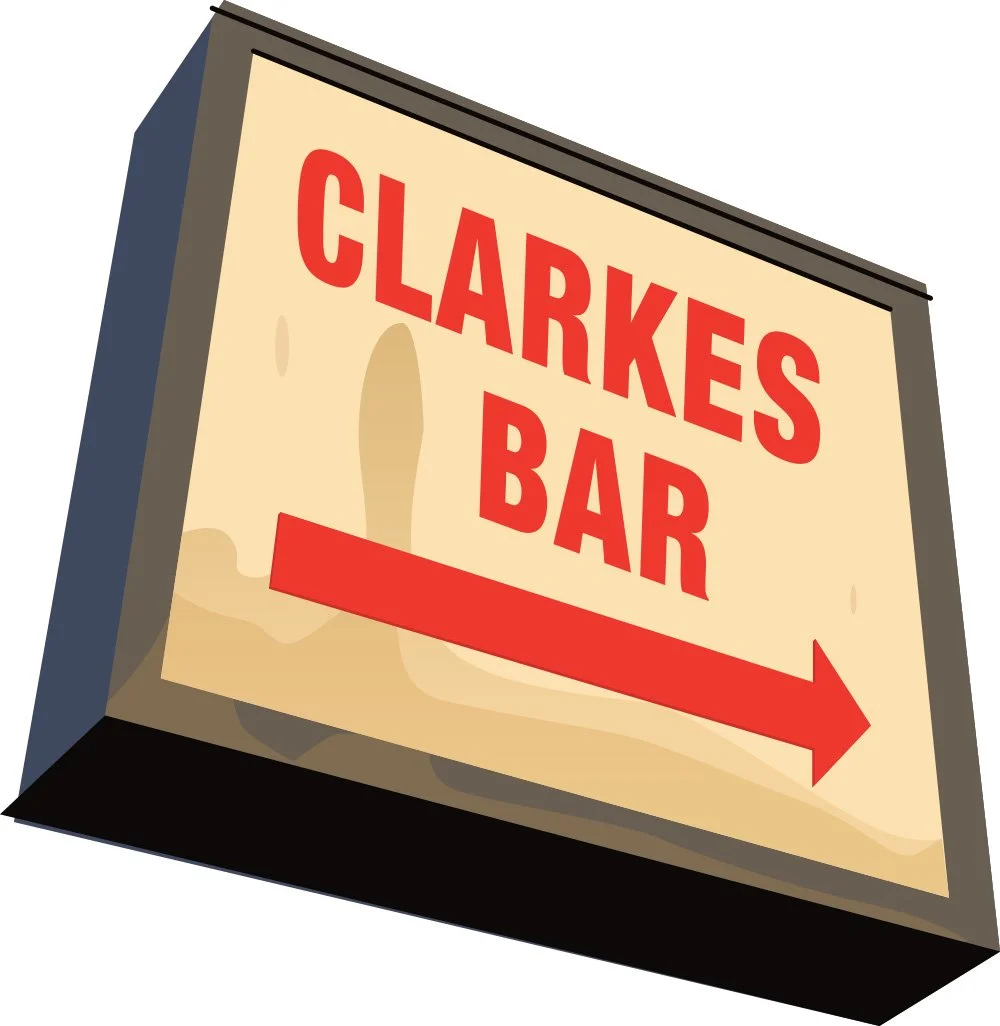
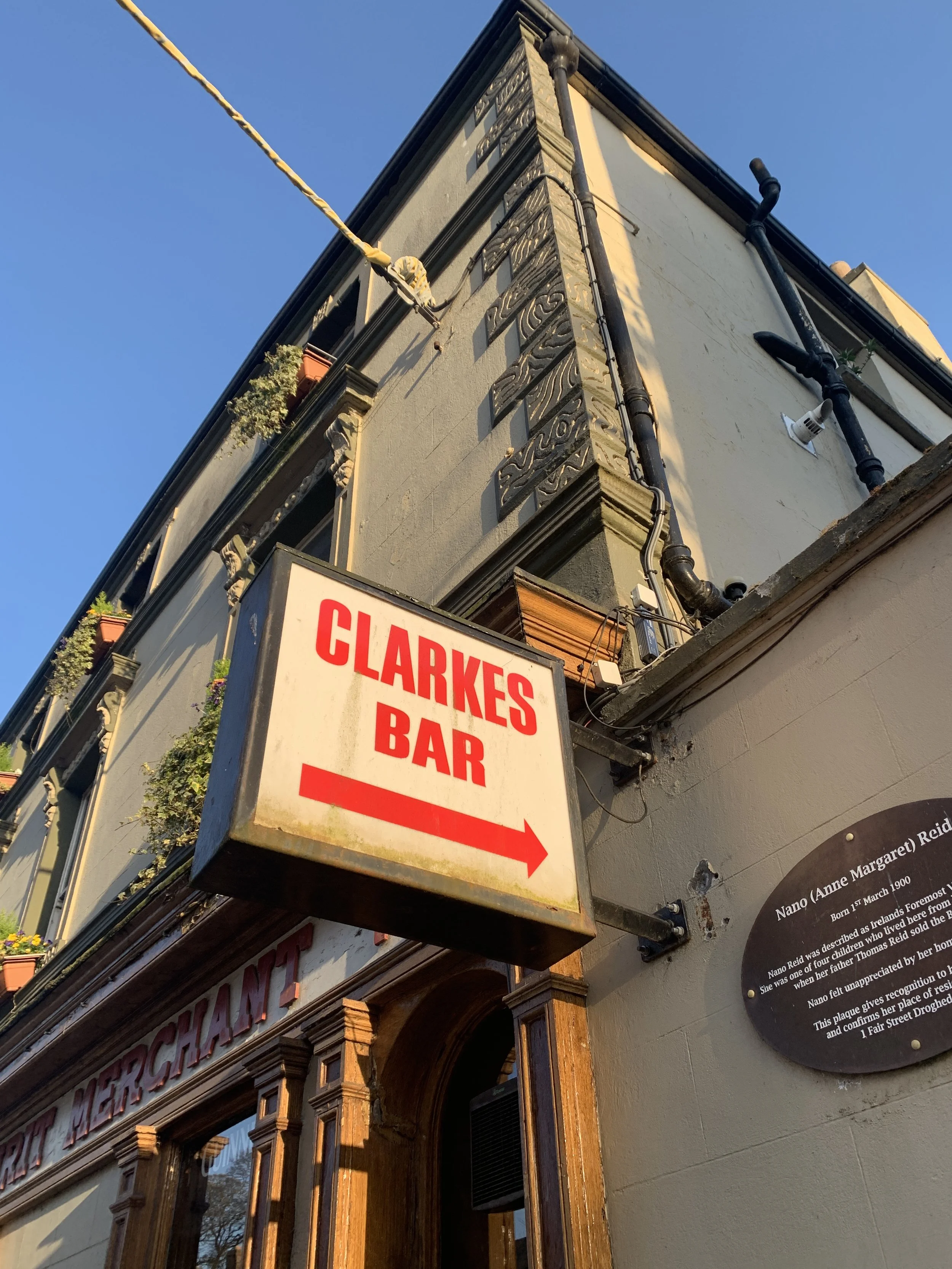
Clarkes Signage Fair Street
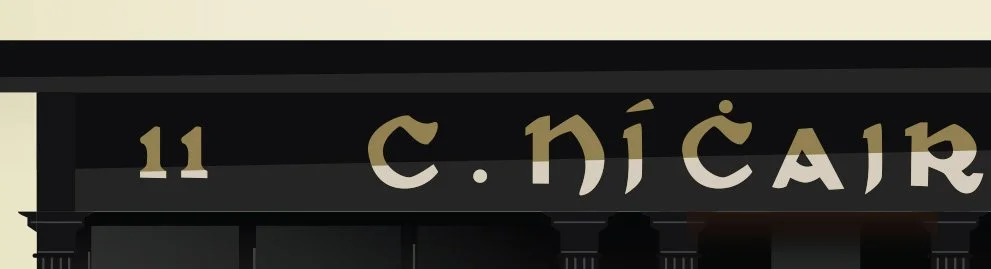
Close-up of a sign with part of a name and the word 'Cigar' visible, with a dark background.
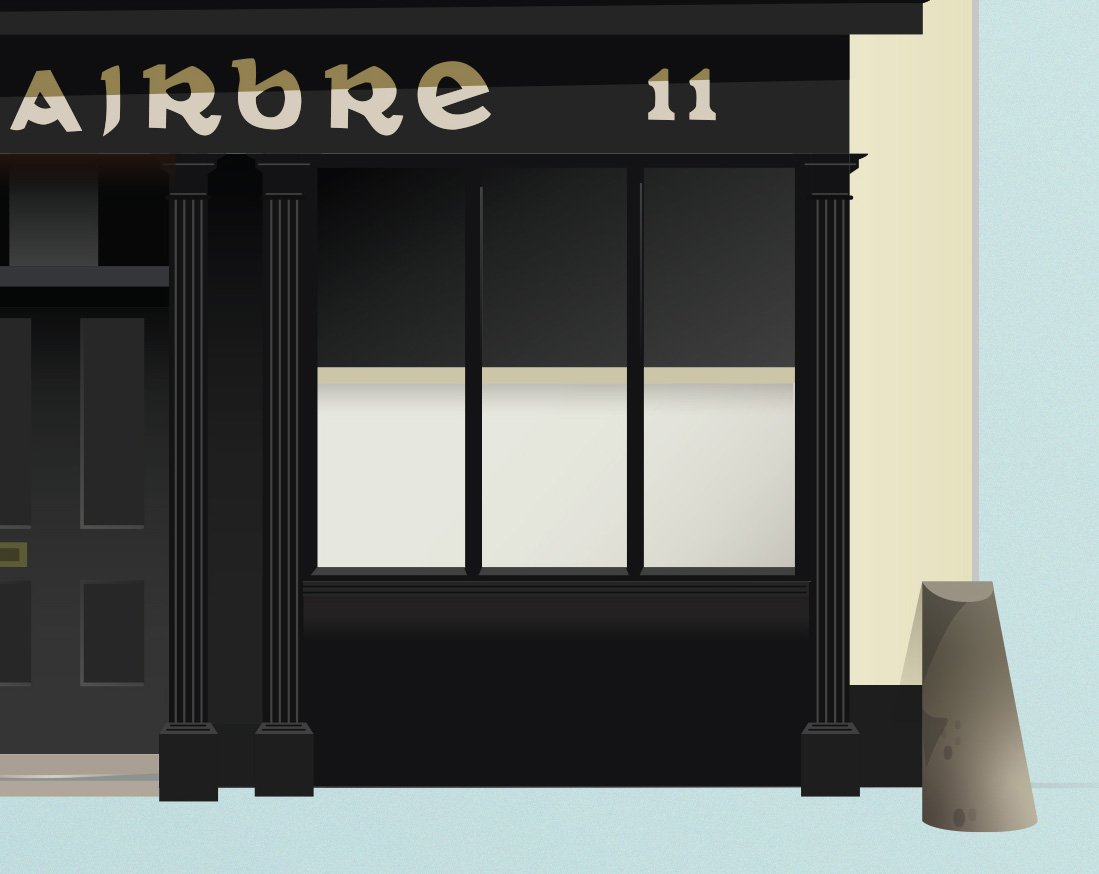
Front of a building with black columns and white windows, with the sign 'AIkbore 11' above the entrance.
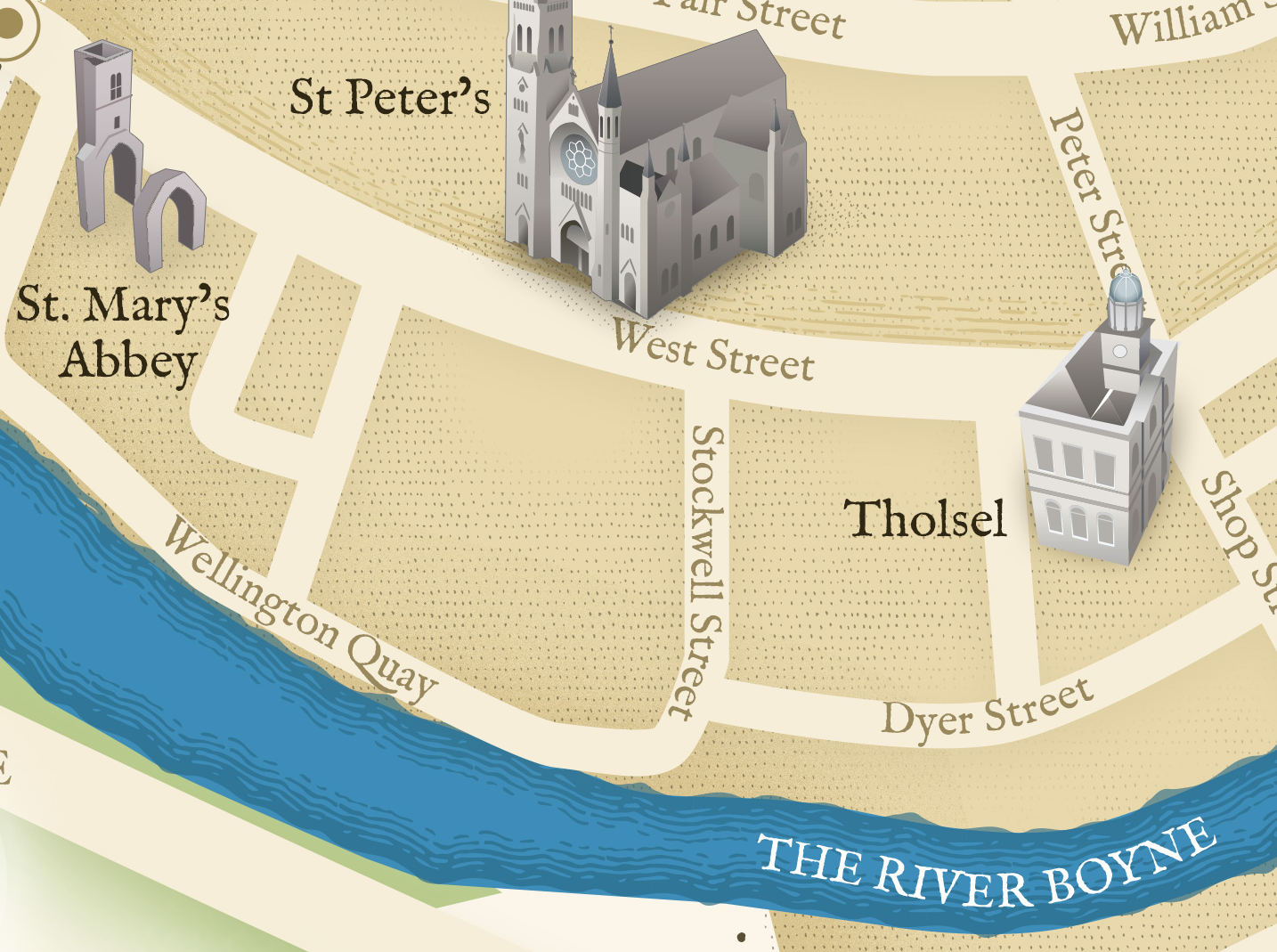
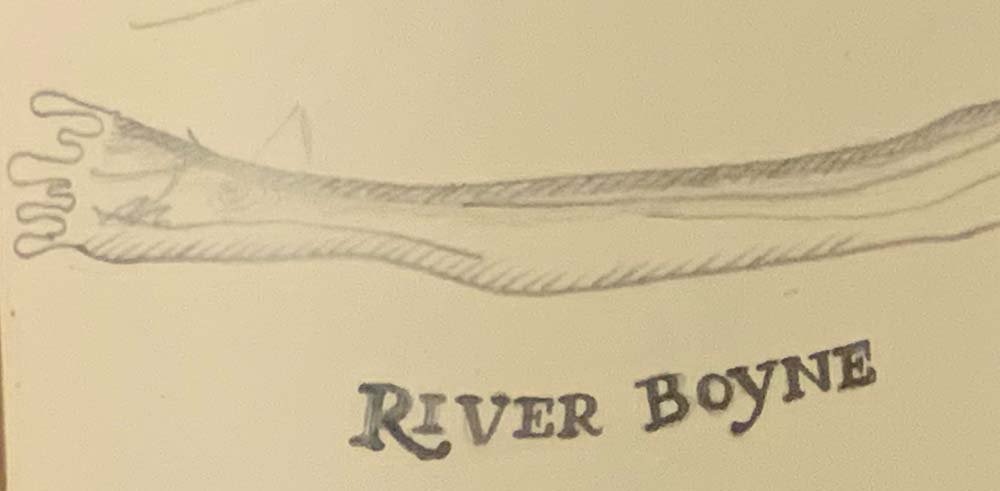
A illustrated map showing streets and landmarks including St. Peter's, William Street, West Street, Socketwll Street, Dyer Street, Tholsel, and the River Boyne. Notable buildings depicted are a large church, a courthouse, and a historic arch.
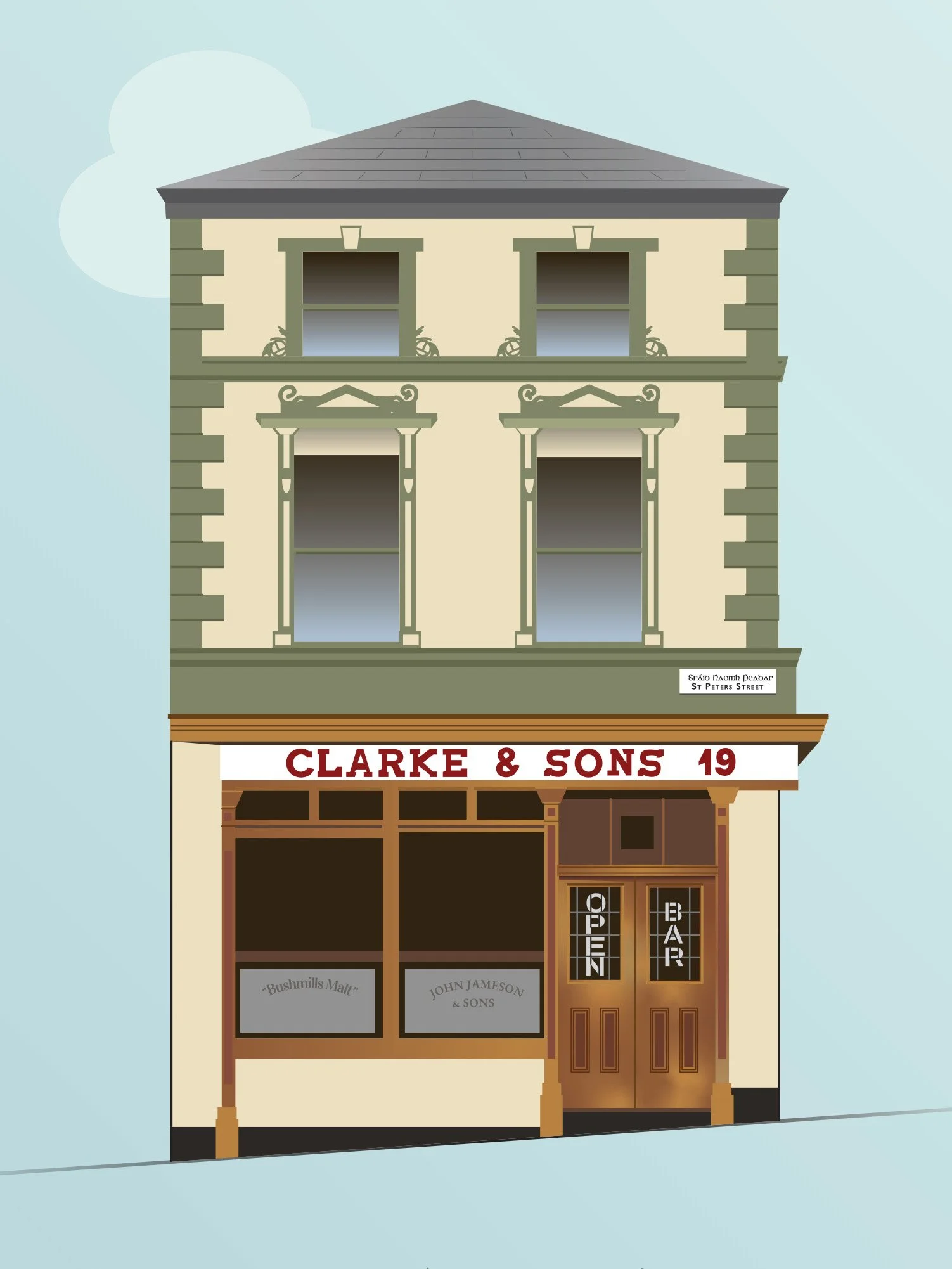
Illustration of a storefront with a sign reading "CLARKE & SONS 19" and a bar sign on the door, with windows showing advertisements for John Jameson & Sons and Bushmills Malt, on St. Peter's Street.
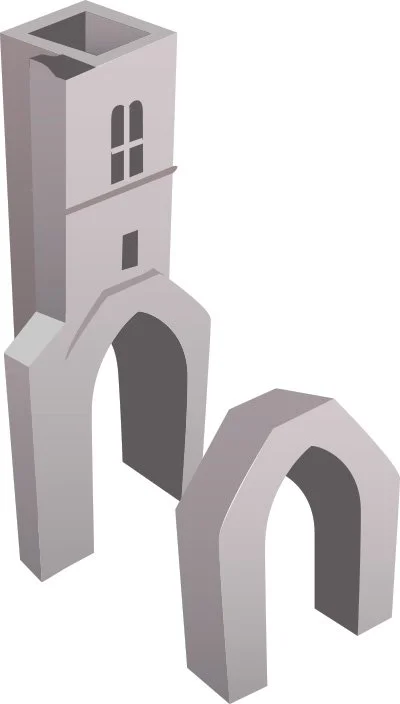
Illustration of a small castle gate with a tall tower, an arched entrance, and a separate arched structure.
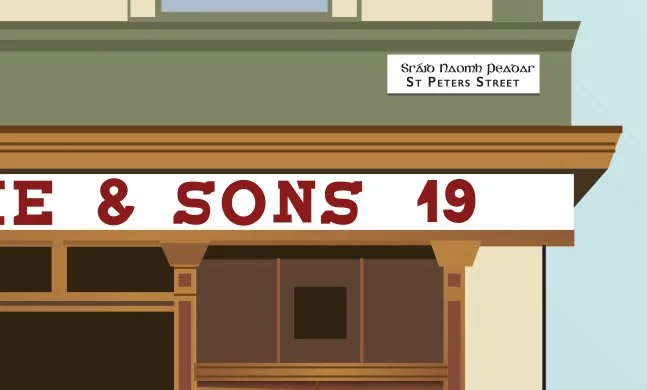
Sign for a store storefront with a partial street sign reading 'St Peters Street' above the store.
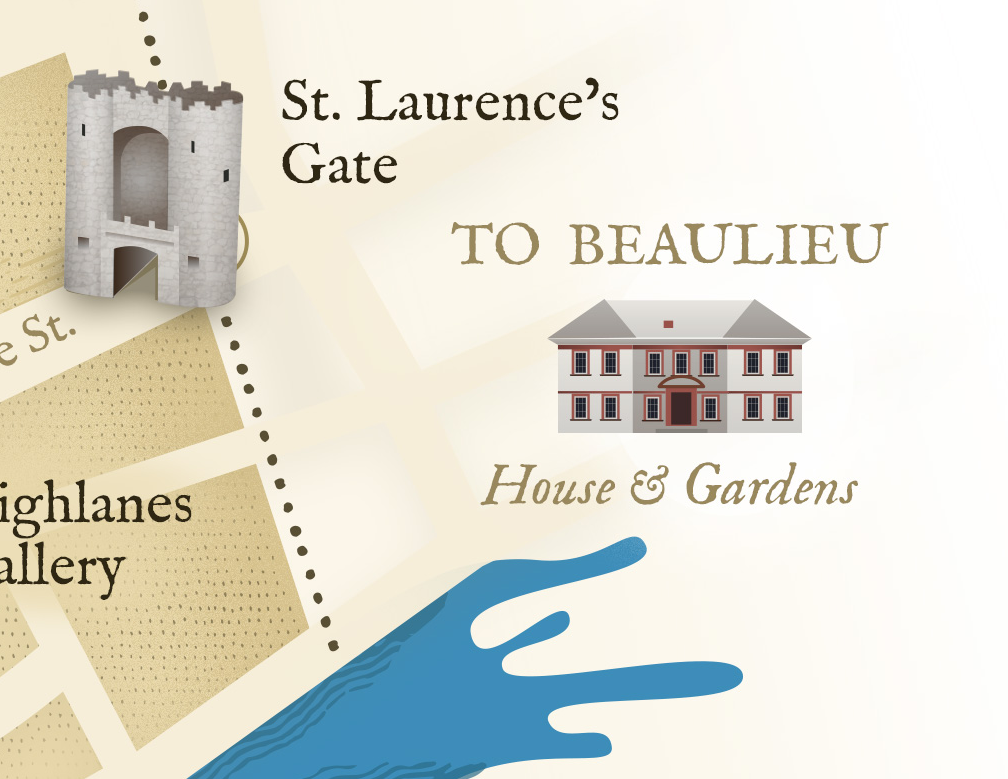
Map showing the route from St. Laurence's Gate to Beaulieu, including highlights of a castle, house, gardens, and an art gallery.
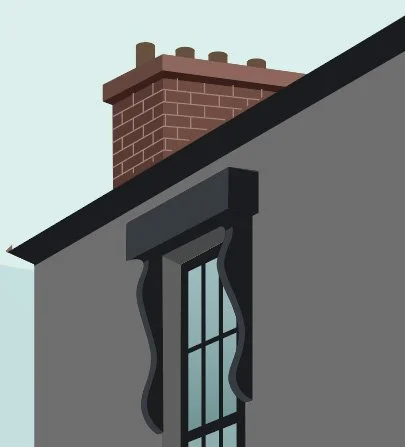
Close-up of a house wall showing a chimney and a window with a black decorative bracket.
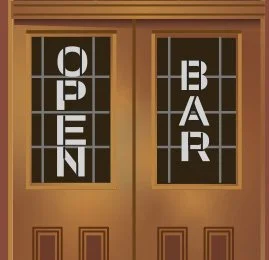
Wooden double doors with glass panes, sign reads 'OPEN BAR' vertically on the left and 'BAR' vertically on the right
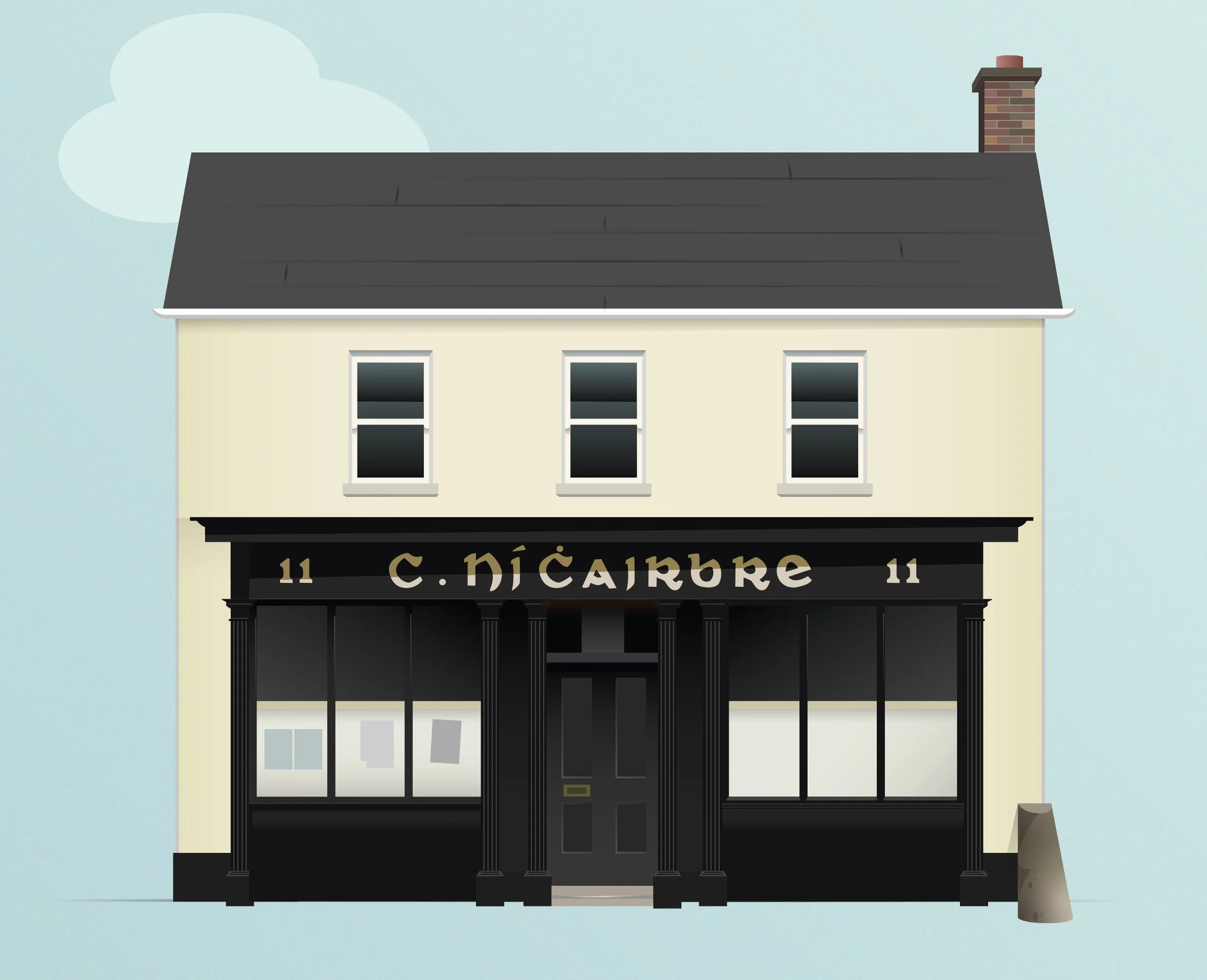
Teach Uí Cairbre, North Strand
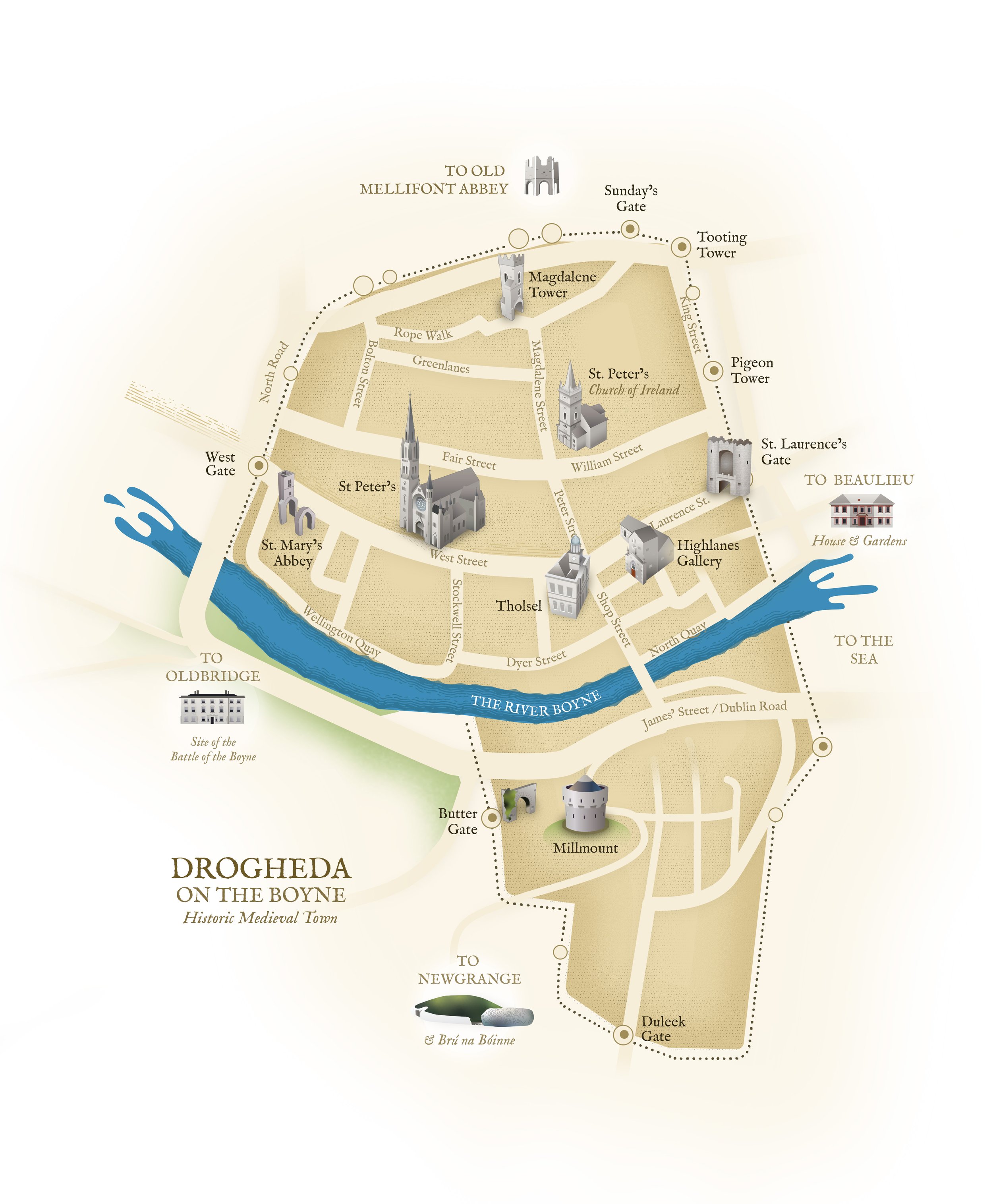
Map of Drogheda on the Boyne area with churches, gates, and bridges labeled, including the site of the Battle of the Boyne and historic landmarks, showing the River Boyne and surrounding streets.
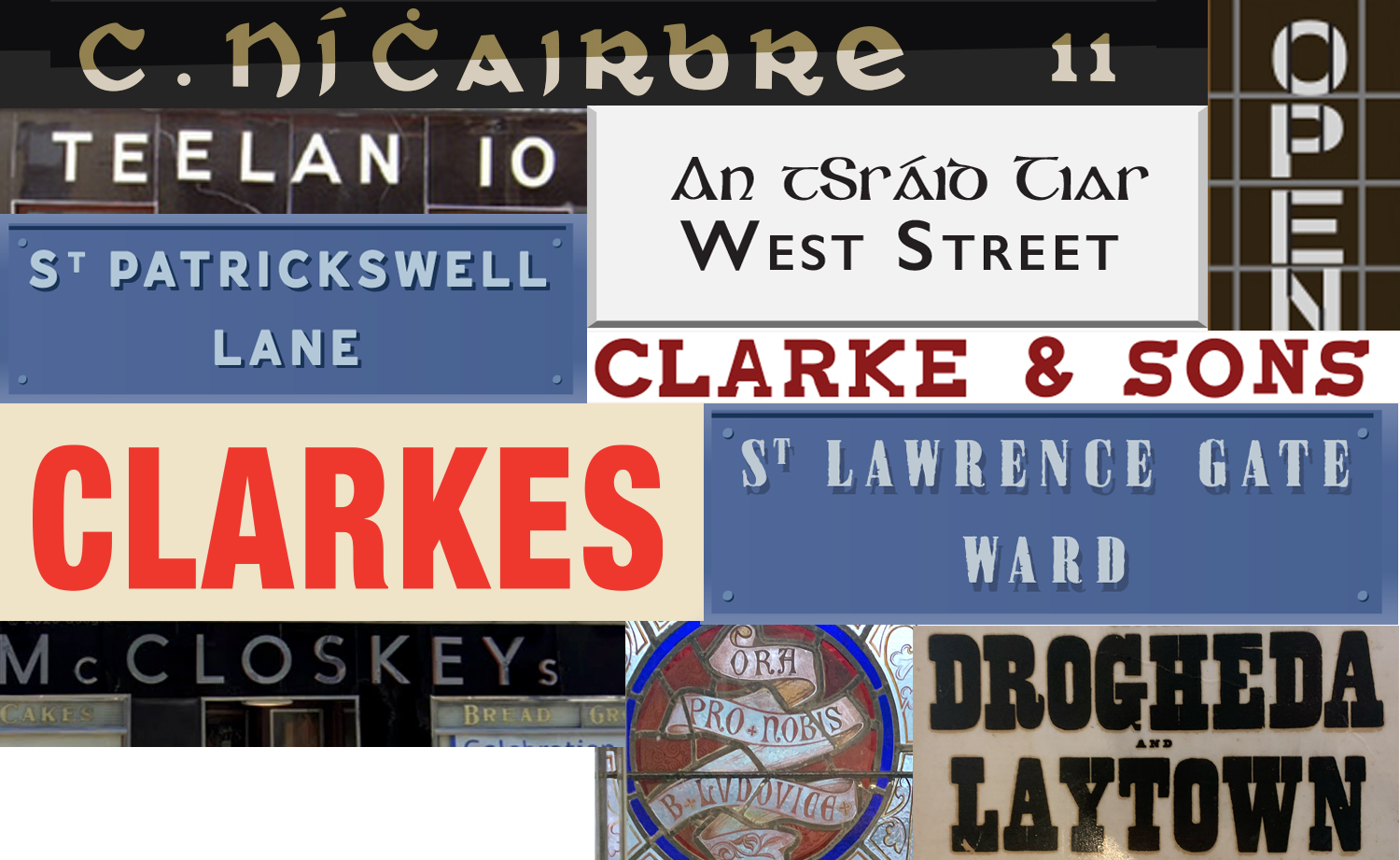
Lettering in place.
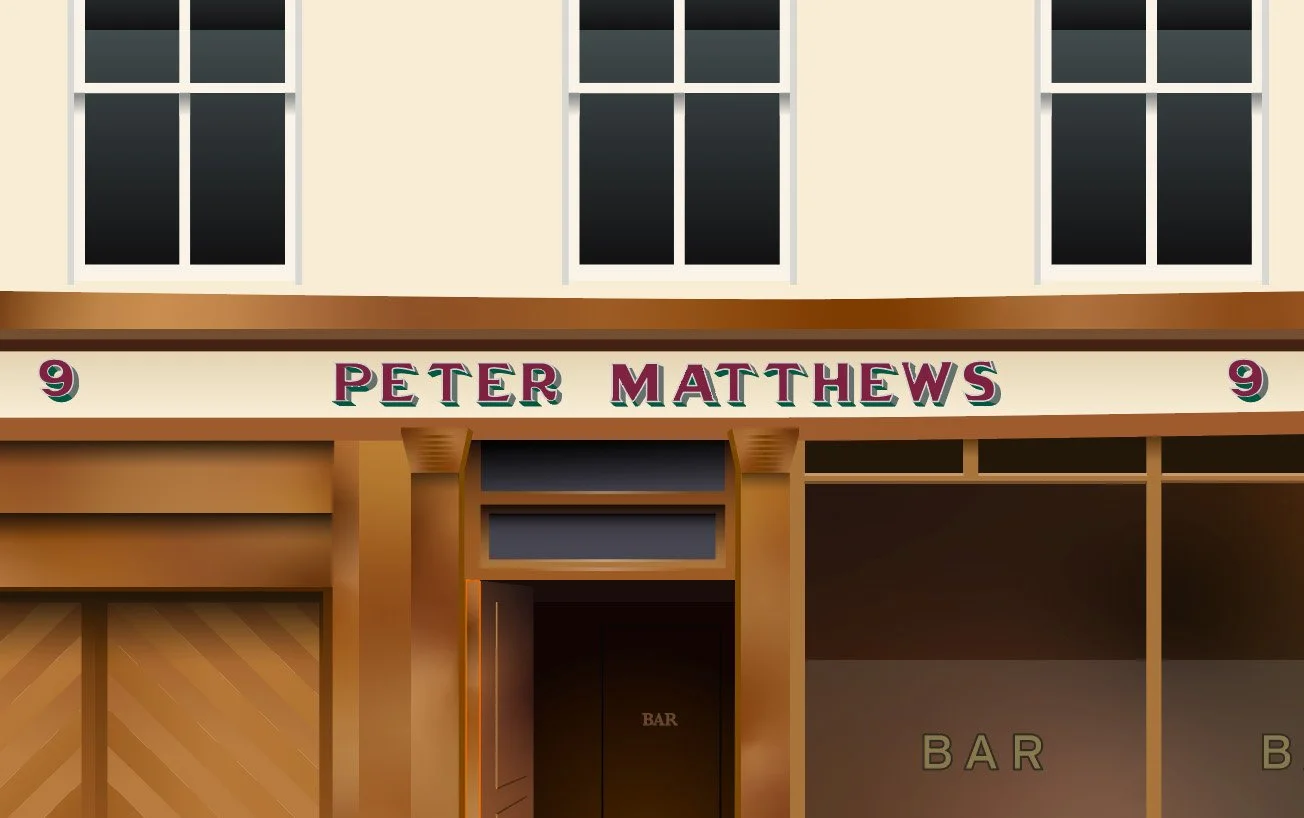
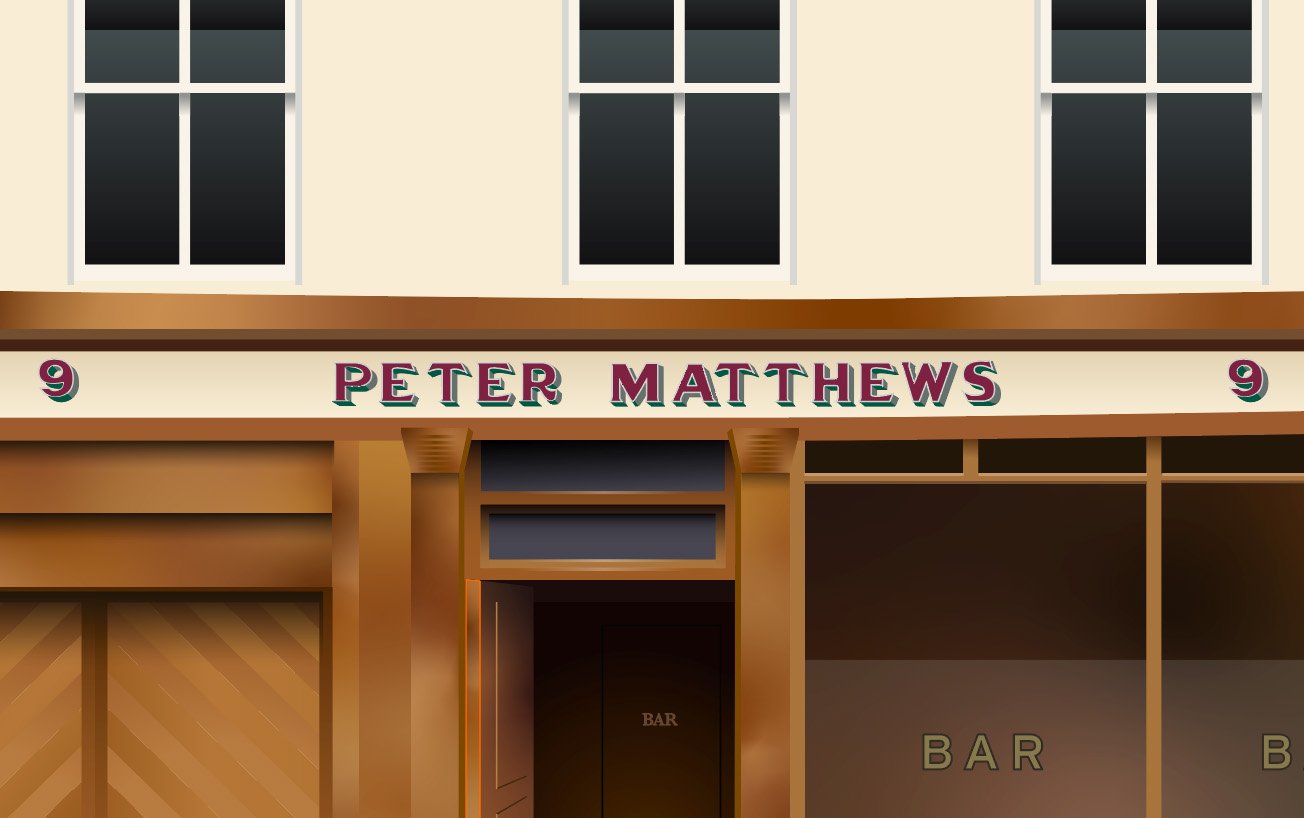
Typography plays a quiet but defining role in the urban landscape. Traditional signwriting reflects a craft shaped by place - where letterforms are often invented or adapted to suit the proportions, surfaces and constraints of a particular building. These signs carry a distinct personality, rooted in context and craft. How beautiful are the Cló Gaelach ‘An tSráid Tiar’ and ‘Ní Cairbre’? As these unique signs are replaced by standardised, manufactured signage, much of that individuality is lost, along with the visual character they once contributed to the street.
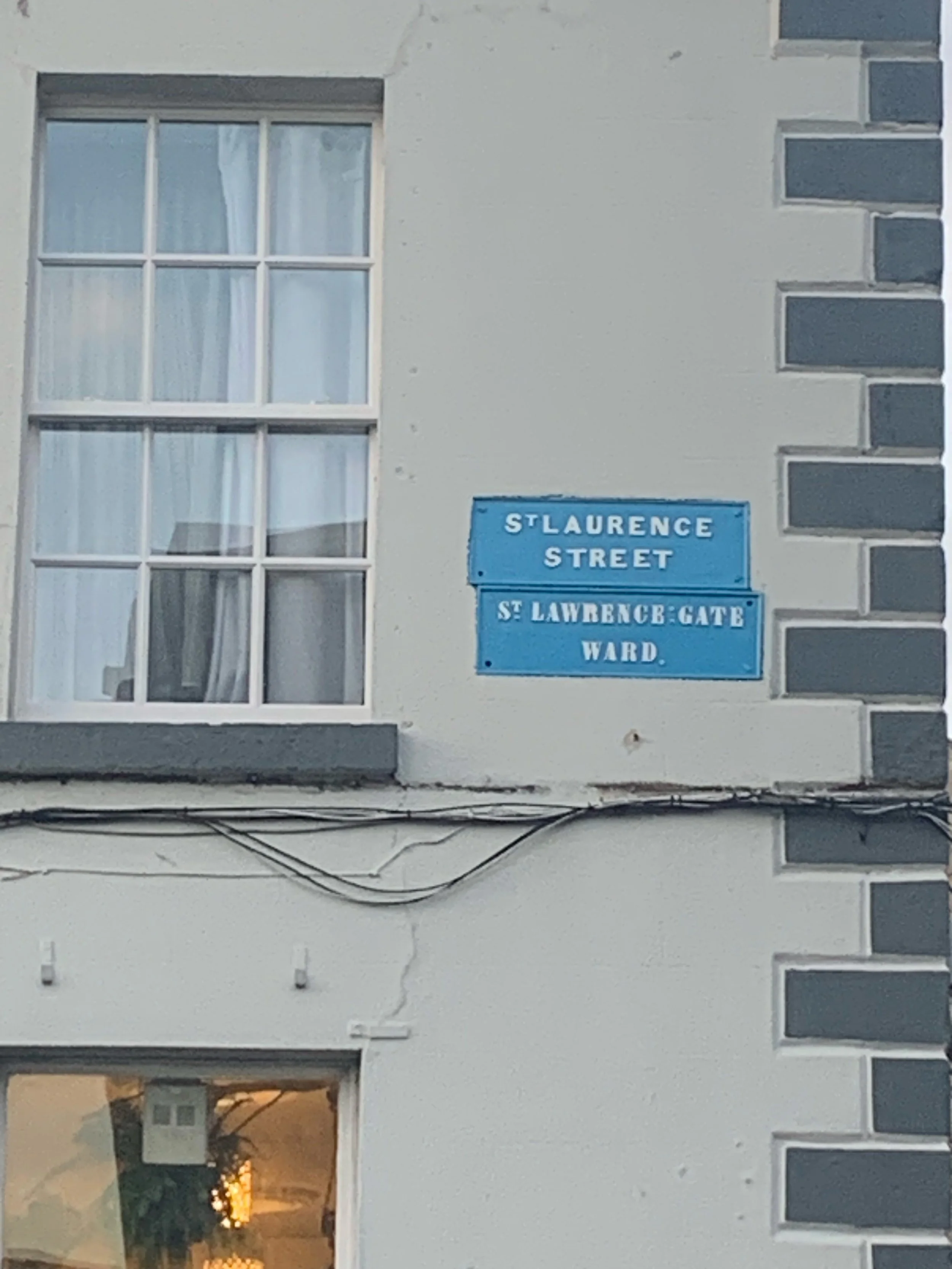
Much as I love beautiful typography, I love strange typography just as much - the weirder and more awkward the better. The signwriter who felt compelled to invent their own typeface on the fly, the strange capitalisation on the old ‘West Street’ street name sign. This project documents Drogheda’s typographic quirks in all their glory, capturing them before they are lost forever.
The Process
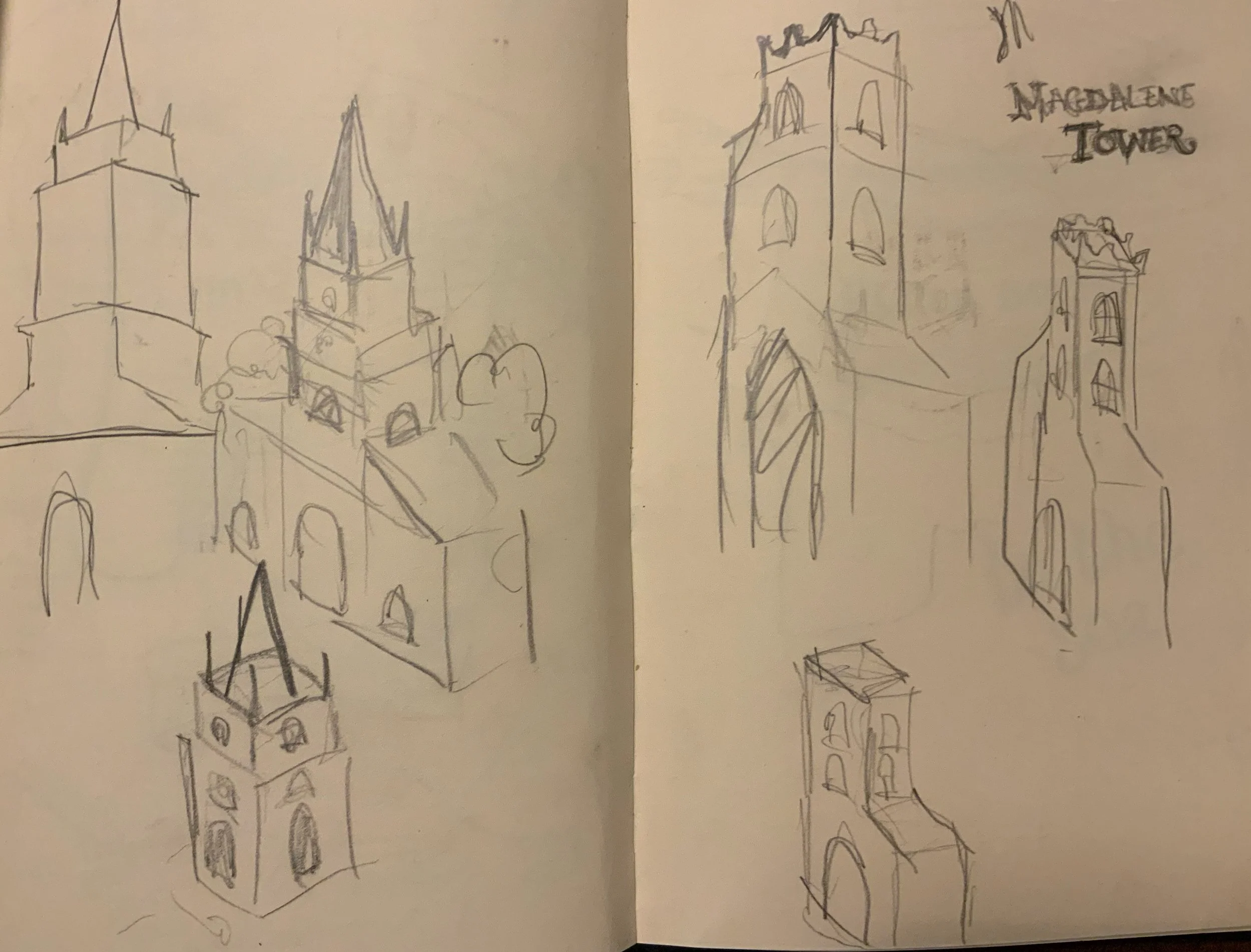
I find it hard to ‘be’ anywhere without something to record what I see. I have always felt compelled to document journeys and places. A sketchbook, a camera, phone - something to capture what I see and remind me of how the golden evening light hits grey granite, warming up the gloom, or the morning sun lights up the underside of an ancient archway so you see it in a whole new way.